Collections
The gap between a $40 listing and a $400 one is real, but it is not all quality — some of it is rent, markup and mythology. Here is what cheap actually buys, which corners are safe to cut, and the ones that cost you more later.
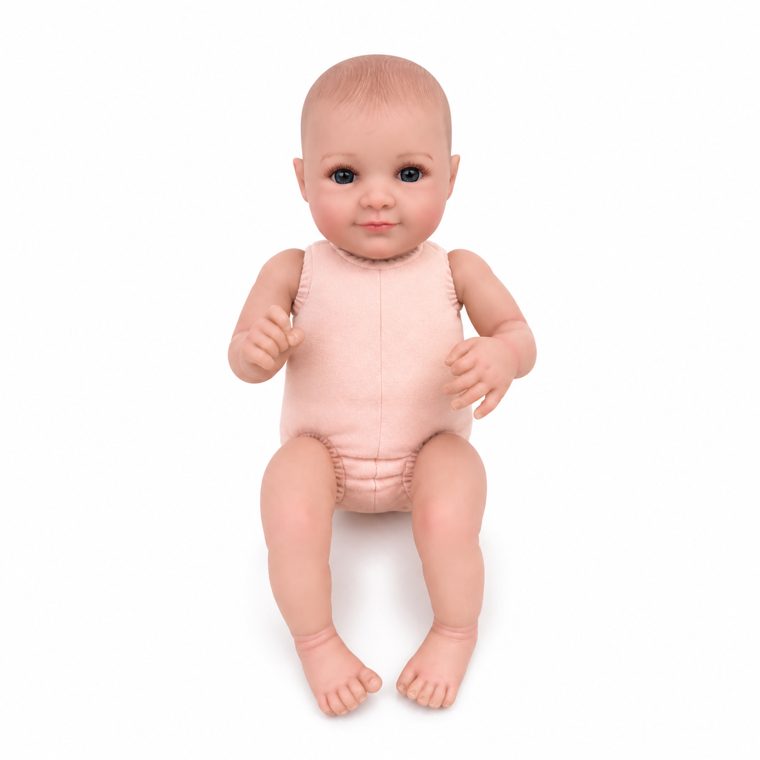
Affordable should mean fewer hours per doll, not unsafe materials. Those are different things, and the market does a poor job of distinguishing them. A 12″ full-vinyl doll with four paint layers and machine-finished details can be perfectly good. A full-body silicone at a fifth of the going rate is not a bargain — it is a description problem.
Safety is the line that does not move. Any doll sold for children should carry ASTM F963 or EN71 documentation. That is why our own cheap tier is vinyl rather than something that merely looks like it.
The single biggest driver is how much material is in the doll and how long finishing takes:
| Construction | 18″ weight | Cost tier |
|---|---|---|
| Full vinyl | 760–1,150 g | Entry |
| Cloth body vinyl | 950–1,150 g | Mid |
| Partial silicone | — | Upper mid |
| Full body silicone | 2,965–3,630 g | Premium |
Size matters as much as material. A 12″ full vinyl doll costs a fraction of a 22″ one in the same construction — roughly a third of the material and much less finishing time.
The where to buy guide covers these in the context of marketplaces specifically.
Some reductions are sensible. Machine-applied base coats under hand-finished detail save hours without hurting the result. Simpler sculpts with fewer parts cost less to tool and assemble. Smaller packaging reduces landed cost per unit noticeably at volume.
Others are false economy. Single-coat paint goes flat within a year. Glued wigs lift at the edges. Unregulated vinyl yellows and can smell. And skipping the safety testing is not a saving at all — it is a liability you discover after the fact.
The honest version: buying direct removes one or two layers of margin, and that is genuinely worth something at volume. It does not magically reduce the cost of silicone or the hours spent rooting hair — anyone promising you both at once is hiding something.
Where factory-direct really pays is specification. Instead of accepting whatever the catalogue offers, you set size, material, paint layers and weighting against your own budget. Usually there is a construction that hits your number and nobody is offering it because nobody asked. That conversation starts on the OEM page.
If you want realism per pound spent rather than maximum realism, two constructions stand out. Cloth-body vinyl at 18″ (950–1,150 g) gives most of the effect, takes rooted hair well and survives being carried. Full vinyl at 12″–16″ is the cheapest honest entry point and a fine first doll.
What we would not recommend economising on is the safety documentation and the finishing grade if the doll will be given to a child or used in care — those two are worth paying for. See the reborn doll price guide for the full picture.
Keep reading
FAQ
Usually because less silicone is used, fewer paint layers are applied, and the finishing is machine-assisted rather than fully hand-done. Occasionally it is because the legal materials and safety testing were skipped entirely — which is the version worth avoiding.
Yes, if it is honest about what it is. A vinyl doll with fewer finishing hours can be excellent. A 'full silicone' doll at vinyl prices cannot exist — the material cost rules it out.
It depends mainly on construction and size. Full vinyl is the entry tier, cloth-body vinyl sits in the middle, and full-body solid silicone is premium. Size multiplies everything, since a 22″ piece costs several times a 12″ one in the same material.
Only if they have been tested. Ask for the actual standard — ASTM F963 for the US, EN71 for the EU — rather than a generic 'non-toxic' claim, which means nothing enforceable. Reputable makers name the standard and can show the report.
Wholesale pricing is quoted against specification: size, material, paint grade, weighting, packaging and quantity. Only HF-series models have a minimum order quantity; other series have no minimum order quantity. Buying factory-direct removes distributor margin, but it does not change what the raw materials cost.
For single units, marginally. For anything near production volume, meaningfully — and the bigger advantage is being able to specify the doll to your budget rather than choosing from a catalogue someone else priced.
Next step
Tell us the size, the material and the price band you are working to. We will tell you what we would run — and what we would not.
 HAL-see-on